


The homemade torrijas are the quintessential Easter sweet, a traditional recipe that has endured over the centuries and continues to conquer palates with its simplicity and delicious flavour. This dessert, made from bread soaked in milk, battered and fried, is a must at this time of year, and its aroma of cinnamon and sugar takes us straight back to our grandmothers' home cooking.
At Casino Alcalá you can enjoy this traditional dessert all year round and, without a doubt, it is one of our most popular dishes among our diners and it is included in the letter from Casino Alcalá. Today we bring you our recipe for homemade torrijas for you to learn how to make Easter toast step by step Take note!
Homemade Torrijas de Casino Alcalá, a typical Easter dessert
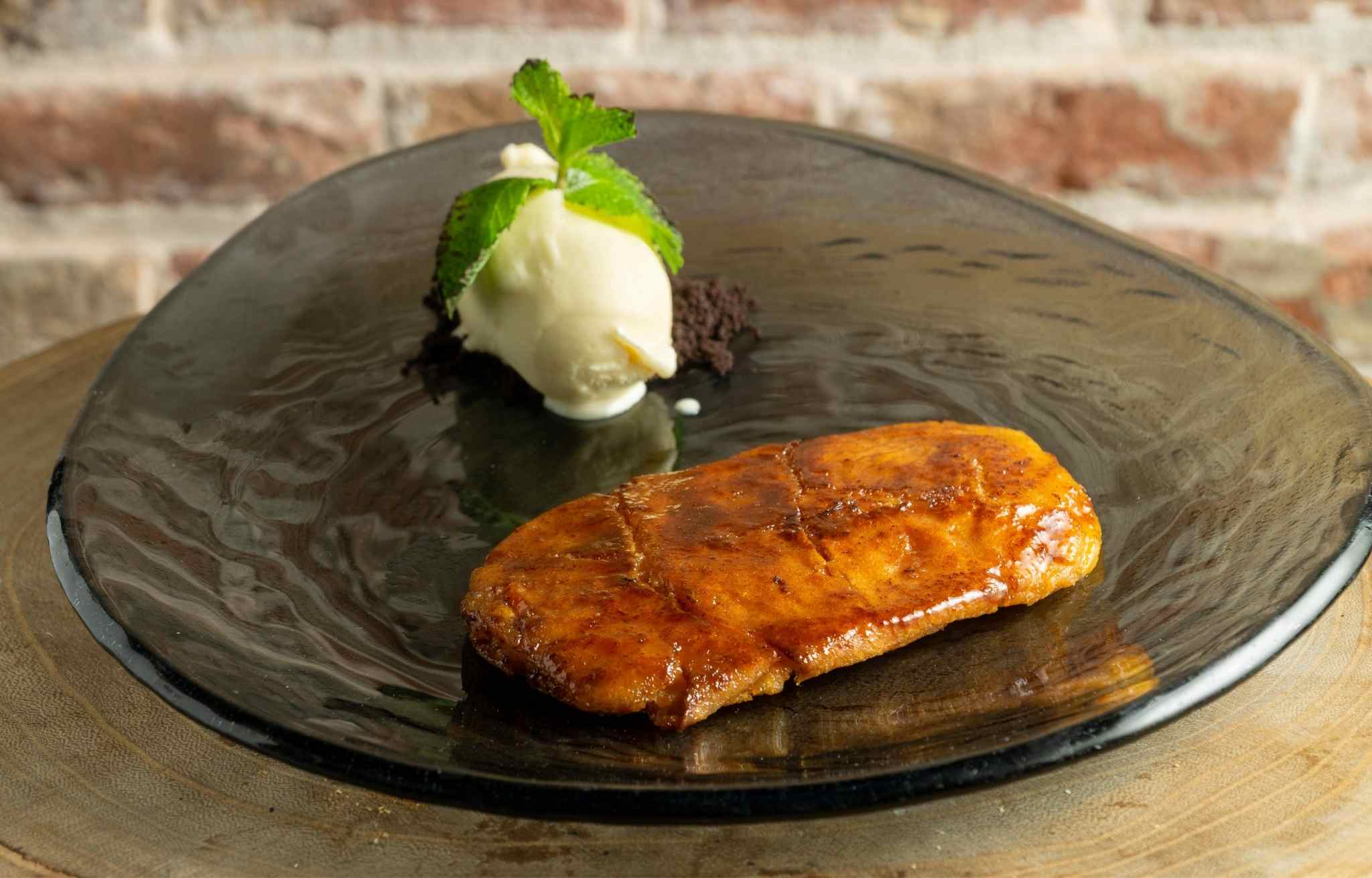
At Casino Alcalá we work with a traditional recipe in which we achieve a torrijas with a light vanilla taste, creamy on the inside and toasted on the outside, accompanied by chocolate and vanilla ice cream.
For the torrijas lovers we have prepared this quick and easy recipe with which you will surprise at home during the Easter holidays.
Ingredients for making torrijas
For 22 units
- Bread for torrijas (20 slices)
- 1 litre of milk
- 100 grams of sugar
- 1 cinnamon stick
- 1 litre of olive oil
- 2 eggs
- Sugar for breading
- Ground cinnamon for breading
- Recipe for homemade torrijas
How to make Easter toast step by step
- Cut the bread of your choice into slices of approx. one and a half to two centimetres. Use a bread from the day before, You will get juicier and creamier torrijas because it will absorb the milk better.
- In a saucepan boil the litre of milk, the sugar, the cinnamon stick and the lemon peel.. Remove when it starts to boil and wait until it cools down to soak the slices.
- For one hour, leave the bread soaking then beat the eggs and dip the toast into the eggs, soaking both sides of the toast.
- Fry the torrijas on both sides in plenty of hot olive oil. Drain well and place on paper towels to remove excess oil.
- To finish, mix 100 grams sugar with ground cinnamon (two spoonfuls) and coat the torrijas in batter.
Accompany them with whatever you like best (fruit, ice cream, chocolate soil...) or serve them in this simple way. We encourage you to prepare this recipe or, if you prefer, you can come to Taste our homemade torrijas this Easter in Casino Alcalá, we are waiting for you!
Summary recipe torrijas semana santa
Torrijas de semana santa
| Preparation | 1 Hour |
|---|---|
| Cooking | 20 Minutes |
| Total | 1 hour and 20 minutes |
Ingredients
- Bread for torrijas (22 slices)
- 1 litre of milk
- 100 grams of sugar
- 1 cinnamon stick
- 1 litre of olive oil
- 2 eggs
- Sugar for breading
- Ground cinnamon for breading
- Recipe for homemade torrijas
Instructions
- Cut the bread into one and a half or two centimetre slices.
- Boil the sugar, milk, cinnamon stick and lemon peel in a saucepan. When the milk starts to boil soak the slices.
- Leave the bread to soak for an hour and then soak them in beaten egg.
- Fry the torrijas on both sides and remove the excess with a piece of paper.
- Mix 100 grams of sugar with ground cinnamon and coat the French toast in batter.
Where do torrijas come from?
Although they are typical of Easter, their origin has nothing to do with the vigil or penitence. Their origin has more to do with breastfeeding...
A slice of bread soaked in milk, A simple and irresistible sweet that we Spaniards make and enjoy every Easter Week. But... How did this dessert come to us?
The homemade torrijas are one of the oldest recorded sweets. A similar recipe is recorded in the book “De re coquinaria” by the Roman Marcus Gavius Apicius in the 4th-5th century. In the chapter devoted to sweet and homemade recipes, without giving a special name to the preparation (the word “torrija” as such did not appear in dictionaries until 1591), it is simply mentioned that the slice of bread should be dipped in milk.
The modern recipe This sweet made with eggs and sugar was introduced in Europe by the Arabs. Over the years, a great variety of these sweets have been made depending on their origin: from the typical milk or wine sweets to the most avant-garde ones with chocolate, custard or honey.
In the 15th century, torrija began to be linked to the birth of babies. This sweet, soaked in milk, was believed to be very useful for stimulating the secretion of milk in women. Bread, milk, egg and something sweet were considered to be energetic foods suitable for women who had just given birth, so they were offered both to the mother and to the guests who came to visit the newborn baby. In the early 20th century torrijas conquered the big Spanish cities and were very common in taverns, served with glasses of wine.